Home prices up 4.7%: does that make a self-build cheaper?
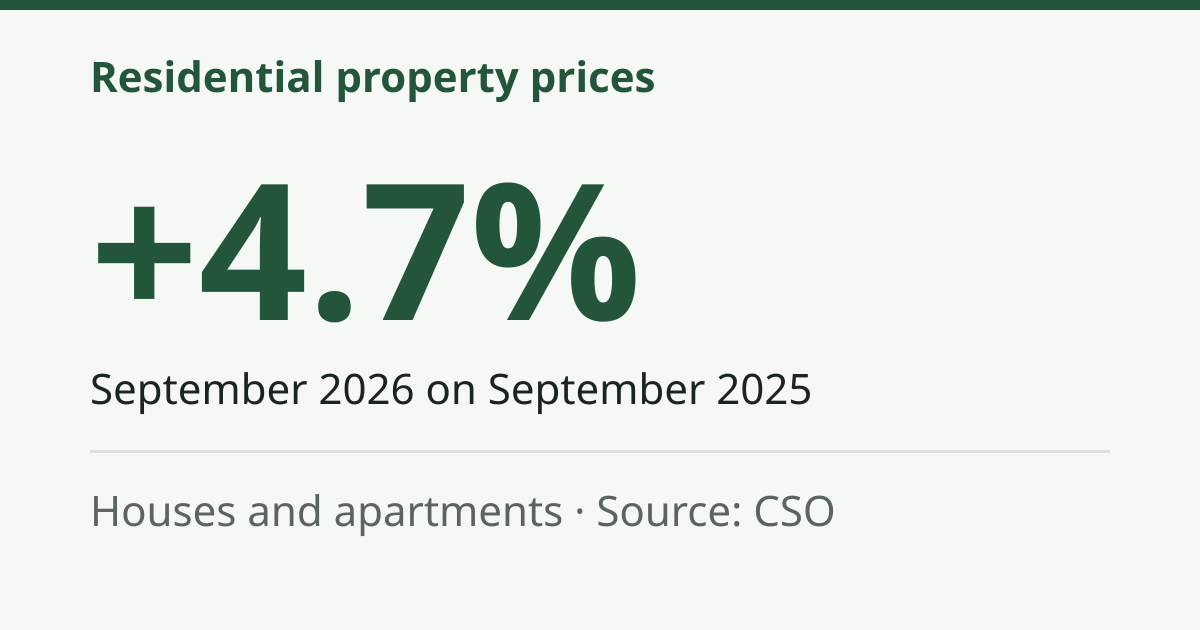
CSO home prices rose 4.7% over the year to September 2026. Building material prices rose 3.8%, but the gap does not tell you which route costs less.
In brief
- Prices paid for homes rose 4.7% over the year to September 2026, compared with 5.1% over the year to August. These figures include houses and apartments.
- Wholesale building material prices rose 3.8% over the same year, excluding VAT. That is not the change in the full cost of a self-build.
- Compare a current budget including the site and all project costs with similar finished homes nearby before deciding whether building costs less.
Prices paid for homes were 4.7% higher in September 2026 than a year earlier, according to the Central Statistics Office (CSO) release on 18 November. Annual growth slowed from 5.1% in August. Slower growth still means prices rose over the year.
The figures cover houses and apartments bought by households. Dublin prices rose 3.9% over the year; prices outside Dublin rose 5.4%. The latest three months of the index are provisional and can be revised.
Are home prices rising faster than building costs?
The CSO’s separate wholesale building material prices index rose 3.8% over the year to September, excluding VAT. Its combined materials-and-wages index rose 3.6% over the same period.
All three changes compare September 2026 with September 2025:
| Measure | Annual change |
|---|---|
| Residential property prices | +4.7% |
| Wholesale building material prices | +3.8% |
| Building materials and wages | +3.6% |
Home prices rose faster than these construction inputs. That does not establish that building is cheaper than buying. These are changes in different measures, not two prices for the same home. A self-build budget also needs the site, professional fees, connections, taxes and a contingency—the money set aside for unexpected costs.
The residential property index specifically excludes self-builds where land is bought separately. It cannot tell you what your site or completed home is worth. The materials index is a national mix of purchases by construction firms, rather than a quote for your house; separately invoiced delivery charges are excluded too.
How to compare building with buying
Start with the home you need in the area where you want to live. Compare similar size, condition and energy performance, rather than a national average.
- Price the complete self-build. Include the site’s purchase costs, construction, fees, site works and connections, VAT where payable, finance costs and contingency. If you already own the site, record its value separately from the cash you still need. Use the build-cost guide to check the budget’s coverage.
- Price a comparable finished home. Add purchase costs and any repairs or upgrades you would need before it meets the same standard. Recent local sale prices are a better starting point than asking prices alone.
- Update the amounts you will actually pay. Replace old allowances with current written quotes. Do not add 3.8% to your whole build budget or increase a quote that already reflects current prices. Our September materials report explains the index’s limits.
- Check the funding and timing. Include rent or other accommodation while building. A lower total cost does not guarantee you can fund the work as bills fall due: see financing the site and the self-build mortgage guide for staged lending.
Use those two complete totals to make the comparison. The national price trend supplies context; your site, specification, quotes and local alternatives decide the result.
Sources
Last reviewed 18 November 2026. Rules and figures change, so confirm anything important with the source before you rely on it.
- Residential Property Price Index September 2026, published 18 November 2026Central Statistics Office
- Residential Property Price Index September 2026: coverage and definitionsCentral Statistics Office
- Wholesale Price Index September 2026, Tables 3 and 4Central Statistics Office
- Wholesale Price Index September 2026: price definitionsCentral Statistics Office
News articles describe what was announced or published on the date shown. They are general information, not financial, tax or legal advice, and measures announced in a Budget may change before they become law.