Building material prices up 3.8% over the year to September
Wholesale building material prices were 3.8% higher than a year earlier. Cement jumped in September; check current quotes before changing your build budget.
In brief
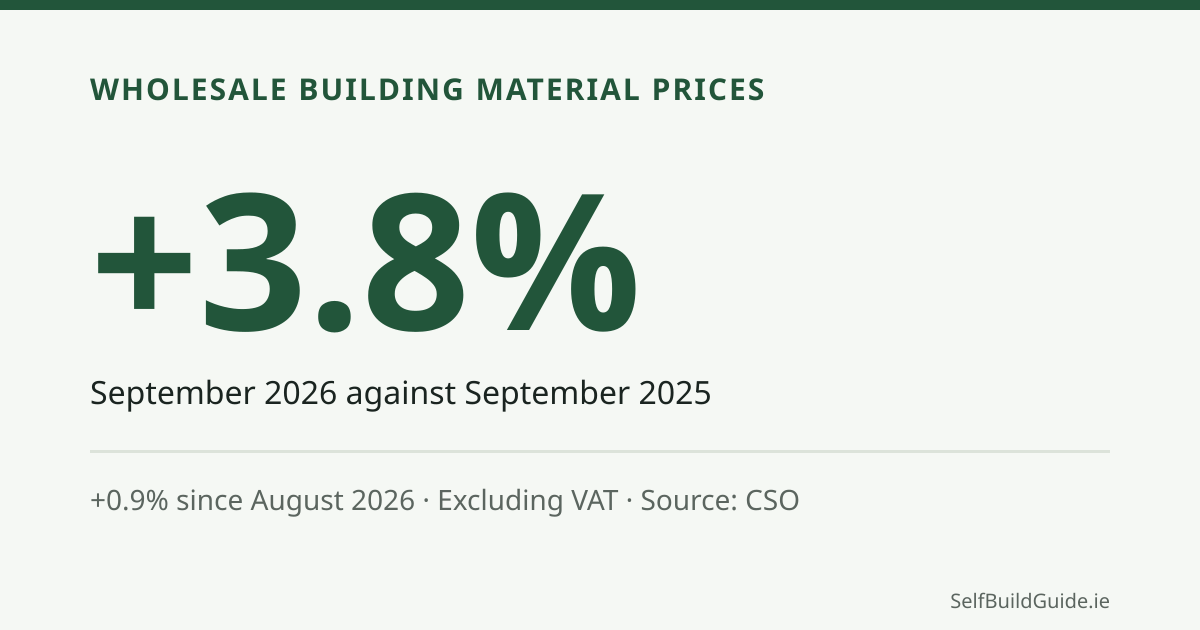
- Wholesale building material prices rose 3.8% over the year to September 2026 and 0.9% in the month.
- Cement rose 11.4% in September alone. That is a monthly change, separate from its 2.8% annual rise.
- Apply a price change only to the relevant materials allowance, using current quotes and the same VAT basis.
Wholesale building material prices were 3.8% higher in September 2026 than in September 2025, according to the Central Statistics Office (CSO). Its release on 27 October also shows a 0.9% rise since August.
Which materials changed?
These are annual changes to September 2026, excluding VAT:
| Material | Annual change |
|---|---|
| All materials | +3.8% |
| Reinforcing metal | +12.5% |
| Ready-mixed mortar and concrete | +6.6% |
| Insulating materials | +5.7% |
| Concrete blocks and bricks | +4.6% |
| Cement | +2.8% |
| Heating and ventilation equipment | −1.6% |
Reinforcing metal means steel bars or mesh used to strengthen concrete. Mortar joins bricks or blocks; ready-mixed concrete arrives ready to pour.
Cement’s annual figure hides a sharp recent change: its price rose 11.4% from August to September. If you have an older cement quote, ask whether the supplier will still honour it. Cement and ready-mixed concrete are separate categories; do not apply the cement increase to a concrete quote automatically.
What could this mean for your budget?
Suppose you had a €150,000 materials allowance excluding VAT priced a year ago. If that same basket of materials rose by 3.8%, it would cost €155,700 excluding VAT: €5,700 extra. That is an illustration of the annual change, not a forecast for your house.
Use the allowance for materials you still need to buy. For example, if only €50,000 excluding VAT remains unbought, a 3.8% change on that amount would be €1,900 excluding VAT. Do not add the increase again to purchases already made or to a quote that already reflects current prices.
Your materials, quantities and agreed prices will differ from the national mix. Replace old allowances with current written quotes, keep VAT treatment consistent, and compare the revised total with your available contingency—the money set aside for unexpected costs. The build-cost guide explains the wider budget.
What does the index leave out?
The materials index measures prices paid by construction firms across Ireland, including domestic and imported products. It excludes VAT and delivery charges shown separately on an invoice. Contract size and negotiated discounts can affect those prices, so it is a general trend rather than a merchant’s price list.
The CSO’s separate materials-and-wages index rose 3.6% over the year. Neither figure is a percentage to apply to your whole project budget, which also needs fees and other project costs.
Before accepting a quote, confirm its expiry date, delivery and VAT charges, and whether the agreed contract allows later material-price adjustments. Ask who carries that risk and get the answer in writing. The builder and contracts guide sets out what to check.
For the underlying monthly series and other categories, see the building material prices tracker, checking the observation date shown there.
Sources
Last reviewed 27 October 2026. Rules and figures change, so confirm anything important with the source before you rely on it.
- Wholesale Price Index September 2026, Tables 3 and 4, published 27 October 2026Central Statistics Office
- Wholesale Price Index September 2026: coverage and price definitionsCentral Statistics Office
News articles describe what was announced or published on the date shown. They are general information, not financial, tax or legal advice, and measures announced in a Budget may change before they become law.